
What is Copper Clad Laminate?
Published Apr 17, 2025
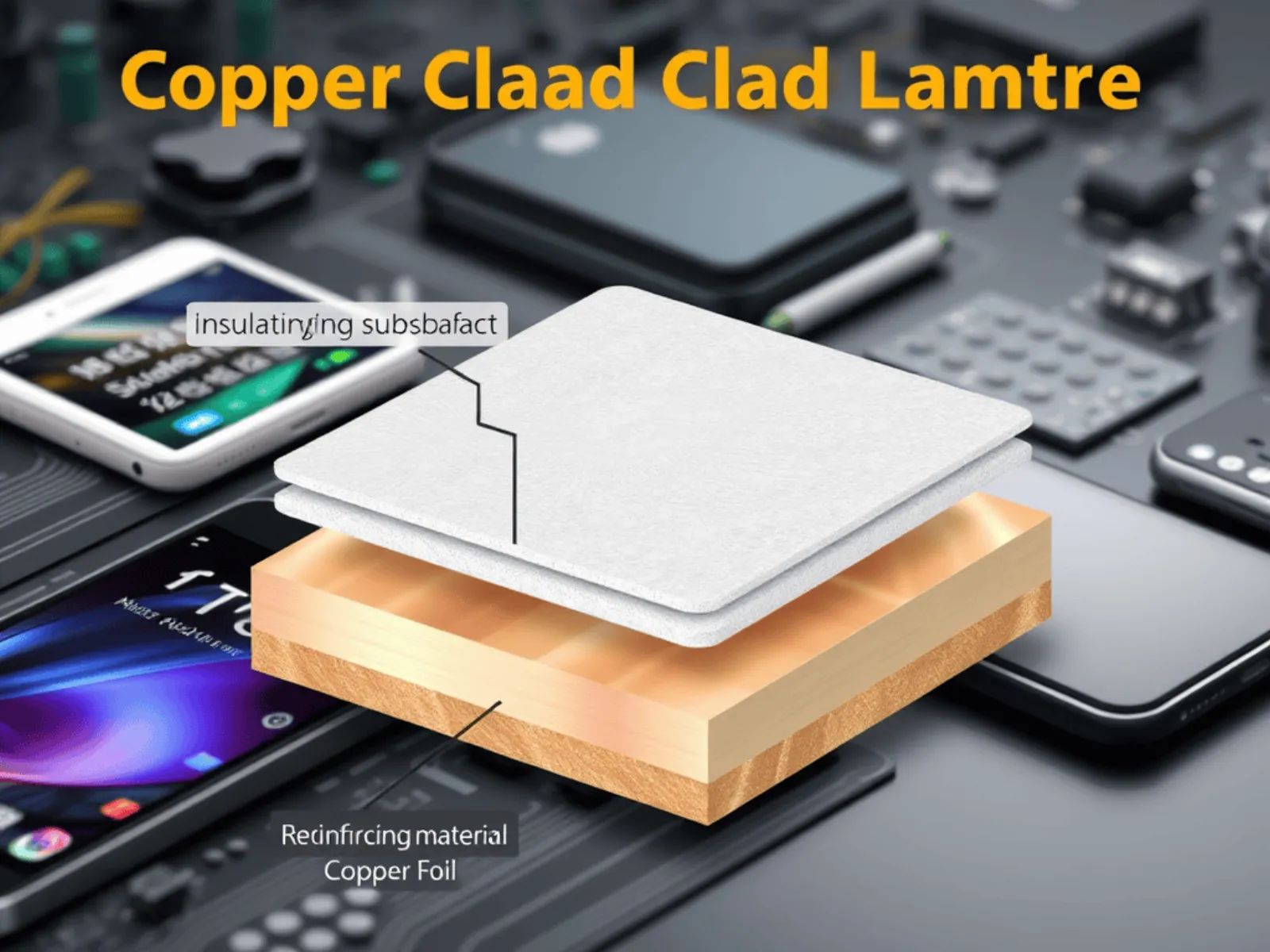
Copper Clad Laminate (CCL) is one of the most fundamental and essential materials in the electronics industry, serving as the core substrate for manufacturing printed circuit boards (PCBs). Simply put, CCL is a composite material consisting of an insulating substrate coated with a layer of copper foil on one or both sides.
Composition of CCL
CCL is primarily made up of three components:
1.Insulating substrate: Typically made of epoxy resin, phenolic resin, or polyimide.
2.Reinforcing material: Commonly fiberglass cloth, paper-based material, or composite materials.
3.Copper foil: The conductive layer laminated onto the substrate, usually 18–70 μm thick.
Types of CCL
Depending on application requirements, CCL can be classified into various types:
By substrate: FR-4 (most common), CEM, aluminum-based, ceramic-based, etc.
By copper cladding: Single-sided or double-sided.
By heat resistance: Standard boards or high-Tg (glass transition temperature) boards.
By special properties: High-frequency boards, high thermal conductivity boards, flexible boards, etc.
Applications of CCL
CCL is used in almost all electronic devices, including:
Consumer electronics: Smartphones, computers, TVs, etc.
Communication equipment: Base stations, routers, etc.
Automotive electronics: Control systems, sensors, etc.
Industrial equipment: Automation control systems, etc.
Why is CCL So Important?
As the base material for PCBs, the quality of CCL directly affects the performance and reliability of electronic products. High-quality CCL must possess excellent electrical properties, mechanical strength, heat resistance, and dimensional stability. With the trend toward miniaturization and high-performance electronics, the demands on CCL continue to increase.
Though often overlooked, CCL is the foundational material supporting modern electronics—truly the "cornerstone of the electronics industry."