
How to Choose the Most Suitable Materials for High-frequency PCBS?
Published Apr 23, 2025
In the design and manufacturing of high-frequency printed circuit boards (PCBs), material selection is crucial. The right material not only enhances circuit performance but also ensures the stability and reliability of the device. So, how do you choose the most suitable high-frequency PCB material?
1. Basic Requirements for High-Frequency PCB Materials
High-frequency PCB materials need to possess low dielectric constant and low loss tangent characteristics. The dielectric constant (Dk) affects the speed of signal propagation, while the loss tangent (Df) relates to signal attenuation. Therefore, selecting materials with excellent electrical properties is key.
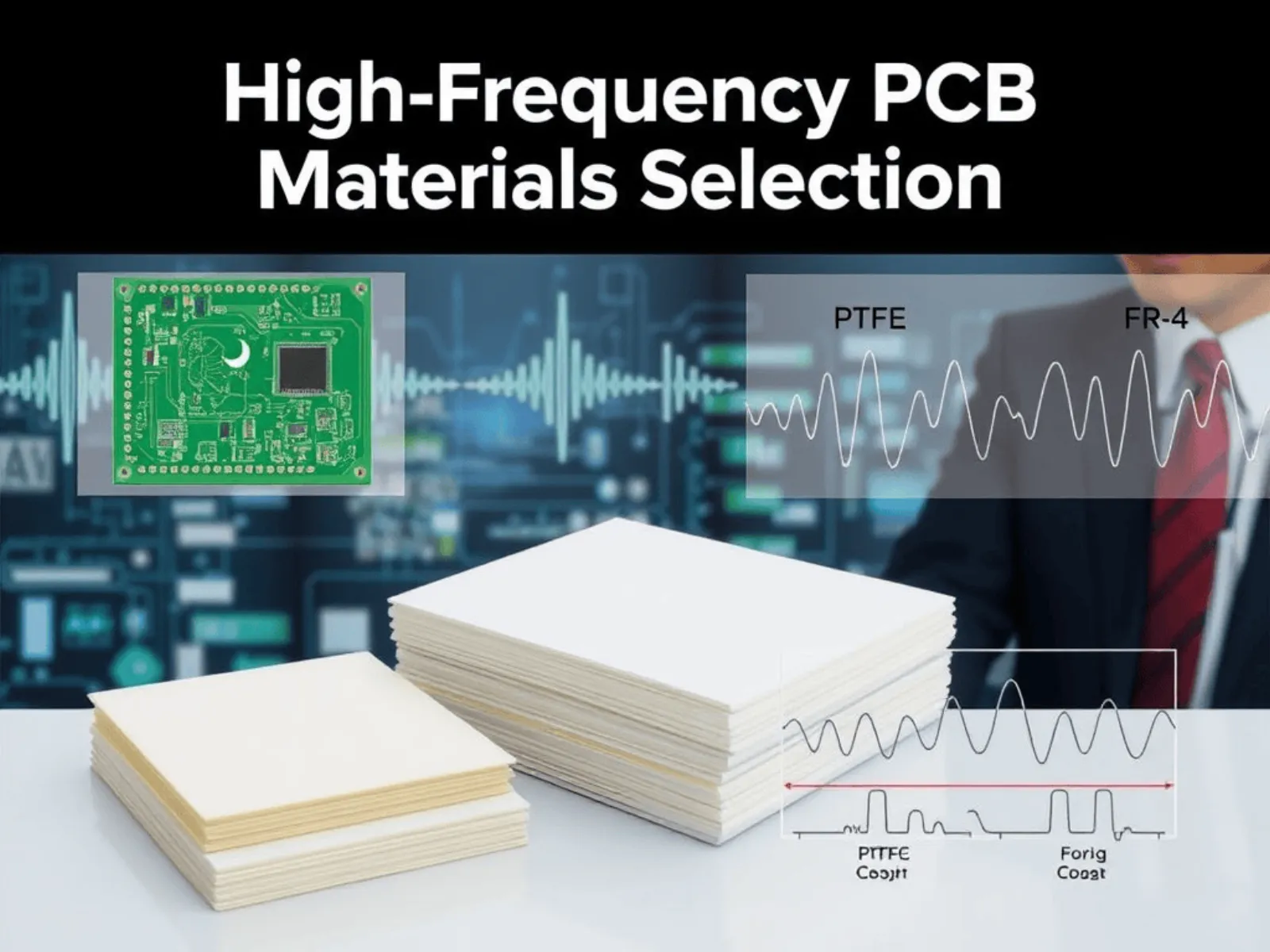
2. Common High-Frequency PCB Materials
PTFE (Polytetrafluoroethylene): This material is widely used in RF and microwave circuits due to its superior electrical properties. For example, **RO4003C** is a typical PTFE material suitable for high-frequency RF and microwave circuits, effectively reducing signal loss. Another example is **RO4350B**.html), specifically designed for high-performance RF circuits, which demonstrates excellent performance in high-frequency signal transmission and is commonly used in high-frequency applications.
FR-4:This is the most commonly used PCB material, suitable for various frequency circuits. Although FR-4's dielectric performance may be slightly inadequate in high-frequency applications, its cost-effectiveness and ease of processing make it popular in low and mid-frequency applications. For instance, [FR-4 (TG 170)](Hybrid-PCB.html) is widely used in high-frequency circuits for communication and consumer electronic devices, providing a good balance of performance and cost.
3. Considerations for Material Selection
When selecting high-frequency PCB materials, in addition to electrical properties, the following factors should also be considered:
Cost: Higher-performance materials typically come at a higher price, so a reasonable choice should be made based on project budget.
Processability: Some high-frequency materials may be challenging to process, so it's essential to ensure that the manufacturer has the necessary technical capabilities.
Environmental Adaptability: Consider the material's performance in specific environments, such as temperature variations, humidity, and chemical corrosion.
4. Future Trends
As technology advances, more new materials are being developed, such as low-dielectric constant polymers and composite materials. These new materials will further enhance the performance of high-frequency PCBs, meeting the increasing market demand.
Conclusion
The material selection for high-frequency PCBs is a complex and important process. Understanding the characteristics and applicability of different materials can help designers make informed decisions, ensuring the performance and reliability of the final product. Whether choosing RO4003C, RO4350B, or FR-4 (TG 170), the key is to make reasonable assessments based on specific application needs.